ServicesBattery Storage
Battery Storage in Cottonwood Heights
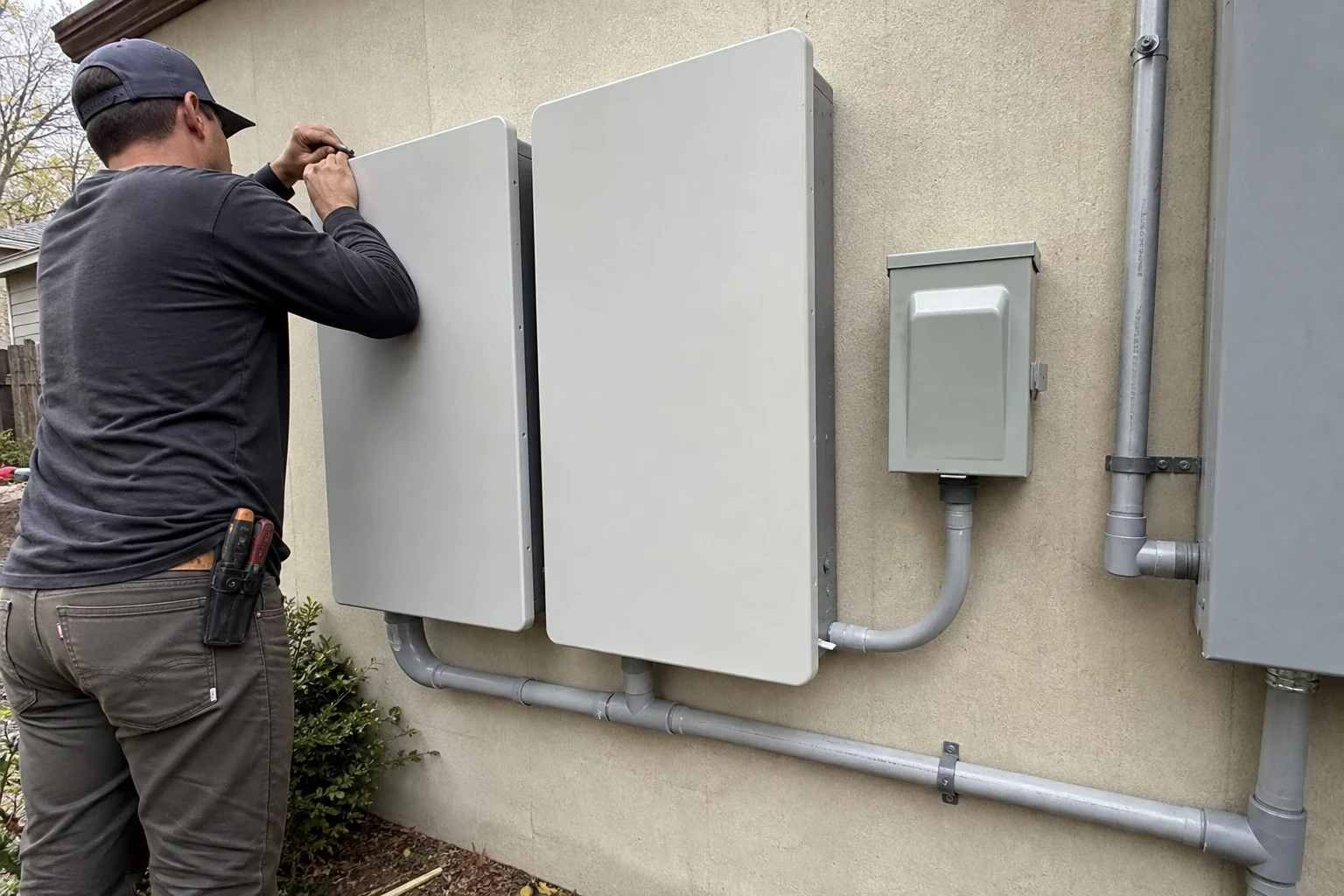
A home battery keeps your solar working after sunset and through outages. We size it to the circuits you actually rely on, mount it where heat, cold and cars can't harm it, and wire it so anyone in your home can shut it off safely.
What a Home Battery Does for Your Home
Your panels often produce more than you use while the sun is up. A battery holds that extra energy and releases it in the evening, or whenever the grid fails. Without storage, most solar systems switch off during an outage by design, even at midday.
In Utah, credits for surplus solar sent back to the grid are worth less than the power you buy. Keeping that surplus and using it yourself is often where a battery earns its place.
A battery is also a large store of energy on a wall of your home. That's why we treat placement, wiring and shutoff as the core of the job, not details to sort out on the day.
What Our Battery Installation Includes
- 01
Load review and sizing
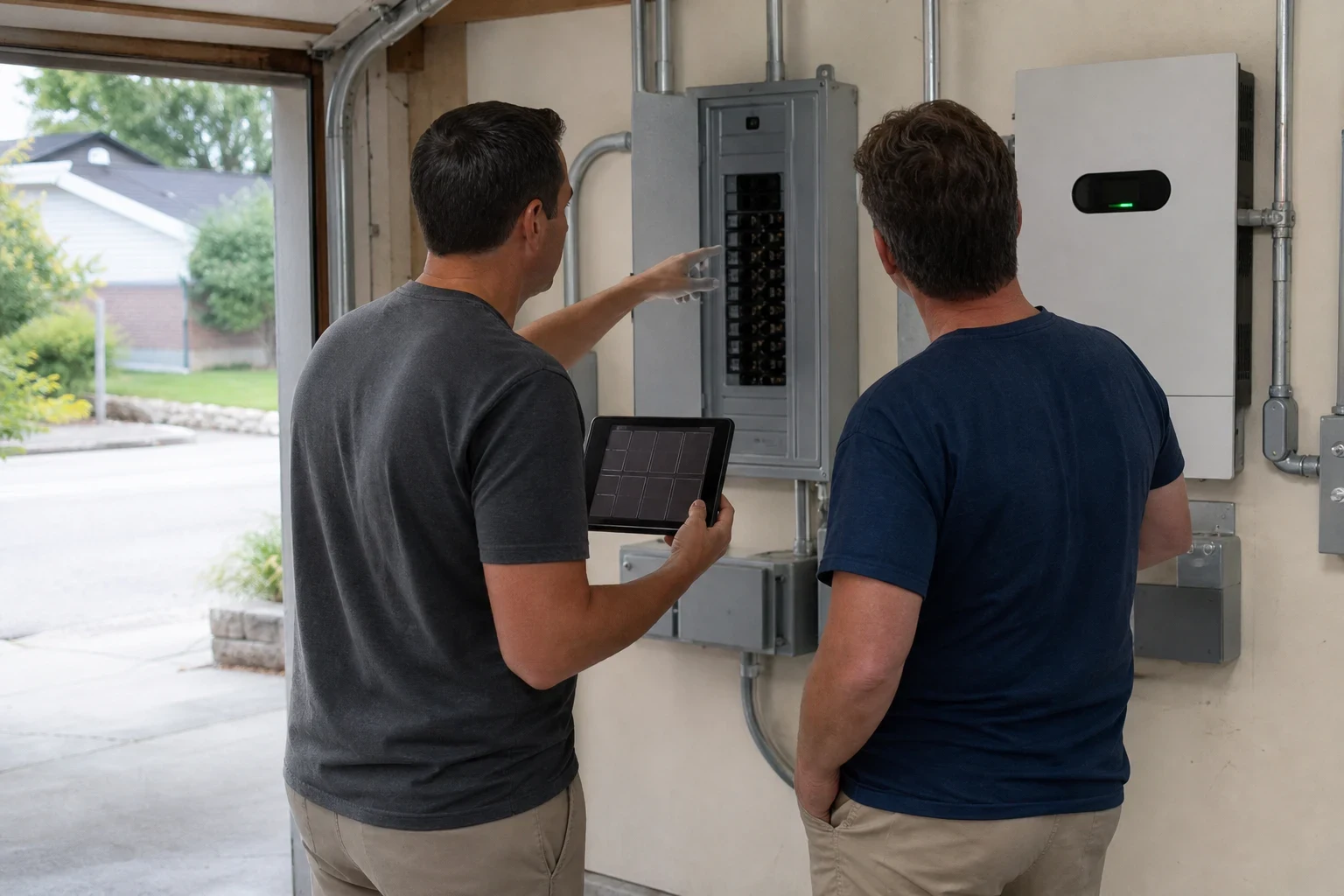
We go through which circuits matter to you during an outage: the furnace fan, refrigerator, internet, a few lights, perhaps a well pump or medical device. The battery is sized to those loads instead of to the largest model available.
- 02
Careful placement
Batteries go on an exterior wall or in the garage, never in bedrooms or living space. We keep the clearances the manufacturer and fire code call for, and in a garage we add impact protection so a bumper can't reach the unit.
- 03
Backup panel wiring
Most homes get a dedicated backup loads panel so the battery feeds only the circuits you chose. Wiring is run neatly in conduit and every breaker is labeled in plain words.
- 04
Labeled shutoffs
Disconnects are placed where you and a firefighter can find them, with clear signage. We show everyone in the household how to use them.
- 05
Permit, inspection and utility approval
We pull the electrical permit, meet the inspector and handle the paperwork with your utility before the system is switched on.
- 06
Commissioning and a walkthrough
We test a simulated outage with you present, set up the monitoring app on your phone and explain what the battery will do on its own and what you control.
Questions about Battery Storage?
Call(801) 876-1777Signs a Battery Makes Sense for You
Your solar goes dark in outages
Grid-tied solar shuts off when the power fails to protect line workers. A battery lets your panels keep supplying your home safely while the grid is down.
You export most of your daytime power
If you're away during the day, much of your solar goes to the grid at a lower credit. Storing it for the evening keeps more of its value at home.
Someone depends on steady power
Medical equipment, a refrigerator full of medication or a home office that can't go offline are all good reasons to have stored power ready.
Winter storms worry you
A battery can keep a gas furnace's blower and controls running through a cold-weather outage, which matters more than most people expect.
You're planning solar anyway
Adding storage during solar panel installation means one design, one permit and one round of wiring work at your home.
How a Battery Installation Runs
- 1
Free virtual appointment
We start with a video call to review your power bills, your solar setup if you have one, and what you want covered in an outage. You'll see the options and how we'd approach your home.
- 2
Site visit and design
We look at your main electrical panel, the wall or garage space and the route for wiring. You get a written plan showing where the battery goes, which circuits it backs up and why.
- 3
Permit and scheduling
We file the permit and utility paperwork and give you a date once approvals are in hand.
- 4
Installation day
Most installs take one to two days. Power to your home is off for a few hours while we connect to the main panel, and we tell you when in advance. Work areas are covered and swept clean before we leave.
- 5
Inspection and switch-on
Once the city inspector has signed off and the utility gives its approval, we energize the system and stage a test outage with you watching. Then we walk you through the app and the shutoffs.
What Moves the Cost of a Battery
The price of storage is shaped less by the battery itself than by how your home is wired and what you want it to cover. Your quote comes in writing, with each part of the job listed on its own line so nothing new turns up later. Financing with $0 up front is available.
- Storage capacity
- Backing up a few essential circuits takes far less capacity than running central air or an electric range. More capacity means more battery modules.
- Your electrical panel
- If your main panel is aging or has no open breaker spaces, it may need replacing, or a separate backup loads panel may be added, before a battery can be tied in safely.
- Placement and wiring distance
- A garage wall next to the main panel is simpler than a long run to an exterior wall across the house. Impact barriers and weather protection add to the scope.
- Existing solar or new system
- Adding a battery to existing panels may need different equipment than a battery installed alongside new solar.
Battery Storage Questions
Is it safe to have a battery in my garage?
Yes, when it's placed and installed correctly. Current lithium iron phosphate batteries are stable chemistry, and code sets clear rules for clearances and protection from vehicles. We follow those rules and avoid spots that get direct sun or sit near fuel and solvents.
Can I add a battery to the solar panels I already have?
Usually, yes. We check your inverter and panel during the virtual appointment and tell you plainly what pairing works. Some systems need an added inverter, which we explain before you commit.
How long will a battery run my home in an outage?
It depends on what's plugged in and how much sun your panels get to recharge it. Essentials like the refrigerator, furnace blower, lights and internet can often run through the night and recharge the next day. We estimate this for your actual loads rather than quoting a general number.
Will the battery handle Utah's cold winters?
Batteries have temperature limits for charging, and many include built-in heating to stay within them. We place the unit where it's sheltered from the worst cold and summer heat so it performs well year round.
Do I need a permit?
Yes. A home battery requires an electrical permit and an inspection, plus approval from your utility. We handle all of it and are present for the inspection.
See Whether a Battery Fits Your Home
In a short video call we'll look at your usage, your panel and your goals, then tell you honestly whether storage is worth it. If a friend goes solar after you refer them, you earn $1,000.