ServicesSolar Panel Installation
Solar Panel Installation in Cottonwood Heights
We design and install solar panels on the roof of your home, with a roof check before any work, sealed attachments into the rafters, protected wiring down to your electrical panel and a work area kept safe for kids and pets. It starts with a short conversation and a clear plan.
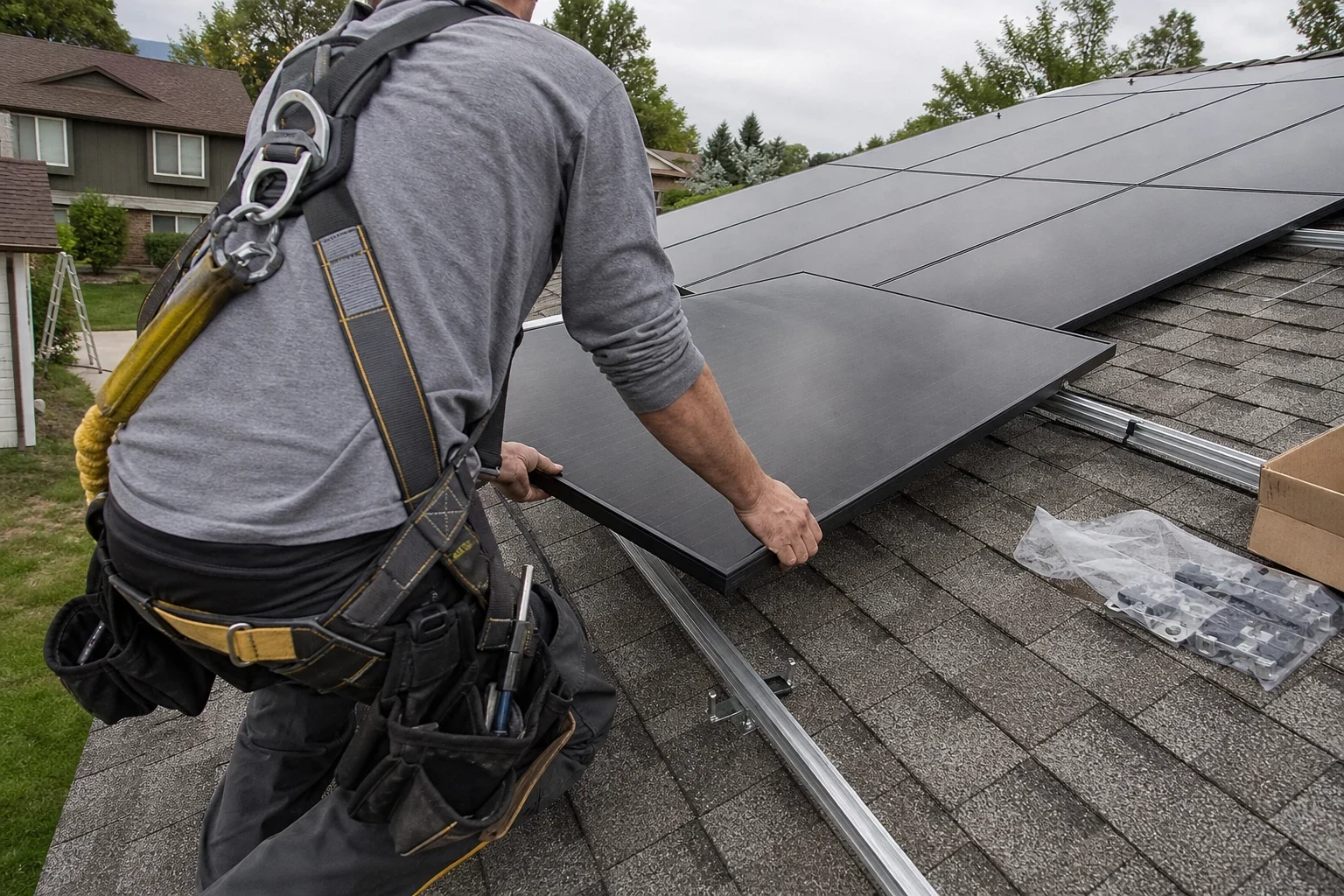
A rooftop solar array built with care
Solar panel installation is the right call when your electric bills keep climbing, your roof gets good sun, and you would like to produce some of your own power. We mount arrays on shingle and metal roofs, set close to the roof surface on low aluminum rails, where they catch the sun and stay out of the way.
Safety shapes every decision we make. Before anything is mounted, we check the roof's condition and find the rafters. Every attachment is flashed and sealed, every wire from the array runs in conduit down to the equipment wall, and every disconnect is labeled so you, a firefighter or a future electrician can shut the system down without guessing.
Many homeowners start with $0 up front. If a battery is part of your plan, our Battery Storage page explains how it pairs with a new array.
What the installation includes
Roof and sun review
We look at where the sun falls across your roof through the seasons, including how low winter sun clears trees and neighboring structures. That shapes which roof planes carry panels and how the rows are laid out.
System design and permits
We size the system to your actual usage, draw up the plans and pull the permit. The utility's interconnection application is ours to handle too, so your array is cleared to run once it passes inspection.
Roof attachments and racking
We check the roof's age and condition, then fasten each attachment into a rafter and seal it with flashing so water stays out. The racking is rated for shingle or metal roofs and for the snow and wind loads the Wasatch Front sees each winter.
Conduit to the equipment wall
Wiring from the array runs in secured conduit across the roof and down the side of the house to the equipment wall, with clean, straight runs and weatherproof fittings.
Electrical connection
We install the inverter, the required disconnects and rapid shutdown equipment, then tie in at your electrical panel. Every component is labeled clearly.
Inspection and walkthrough
We meet the inspector, make any corrections and walk you through how to monitor production and safely shut the system off.
Signs a solar array makes sense for your home
Summer bills keep rising
Air conditioning on hot July afternoons pushes usage up year after year. An array produces most during those same long, bright days.
You have a sunny roof in good shape
A south, east or west roof plane with few shadows and years of life left in the shingles is often all a rooftop array needs.
You plan to stay a while
Solar pays back over time. If you expect to be in your home for years, the savings have room to add up.
An EV or electric upgrade is coming
A new electric vehicle, heat pump or induction range adds load. Planning solar now lets us size the system for where your usage is headed.
You want more control over energy costs
Producing your own power softens the effect of future rate changes on your monthly budget.
How the work unfolds
- 1
Free virtual appointment
It starts with a phone call, where we talk through your bills, your roof and your goals. You come away with a clear sense of system size and placement before anyone visits.
- 2
Design, permit and paperwork
We finalize the layout, apply for the permit and file the interconnection forms with your utility. You review the written plan and estimate before anything is scheduled.
- 3
Build days
The crew works in harnesses with ladders secured, the area below the roof edge is taped off, and tools and materials are put away at the end of each day. Most rooftop projects take one to a few days on site, depending on size and roof layout.
- 4
Inspection and power on
Once the inspector signs off and your utility gives the go-ahead, we turn the array on together. We show you the monitoring app and point out each shutoff so you know exactly where they are.
What moves the cost of an installation
Every roof and electrical setup is different, so we price each system from its own design. You get a written estimate that shows where the money goes before you commit. Many homeowners choose $0 up front.
- System size
- The number of panels follows your yearly usage and goals. A larger array costs more but produces more power over its life.
- Roof layout and condition
- Steep pitches, several roof planes or metal roofing add labor and parts. An older roof may need repair before panels go on, and we tell you up front.
- Electrical panel condition
- Some older panels need an upgrade to accept a solar connection safely. We tell you plainly if yours does and why.
- Equipment choices
- Panel efficiency, inverter type and whether you add a battery all affect the total. We explain the tradeoffs without pushing the top tier.
Solar panel installation questions
Something not covered here? (801) 876-1777
Is my roof too old for solar?
Most roofs have a good remaining life if the shingles are not curling or missing. We check age and condition first, because panels stay up for decades. If the roof is near the end of its life, we tell you before you commit.
Will the panels cause roof leaks?
Not when the attachments are done right. Each one is fastened into a rafter and sealed with flashing so water runs past it. During your free virtual appointment we look at aerial imagery of your roof and explain where the attachments would go.
Is it safe to have kids and pets around during the work?
We tape off the area below the roof edge each day and keep ladders secured and tools out of walkways. No live wiring is left exposed when we leave. We will let you know which days involve electrical work so you can plan around them.
Will the system work in winter?
Yes. Panels produce on cold, clear days, and output often rises in the cold because panels run more efficiently at lower temperatures. Production does dip during short days and heavy snow, which we account for when sizing the system.
Do I deal with the permit and the utility myself?
No. We pull the permit, book the inspection and take care of the interconnection application with your utility on your behalf. You will sign a few forms along the way, and we explain each one before you do.
Start with a clear plan for your roof
Tell us about your home and your bills, and we will show you where panels could go on your roof and what they could produce. There is no cost to talk it through.